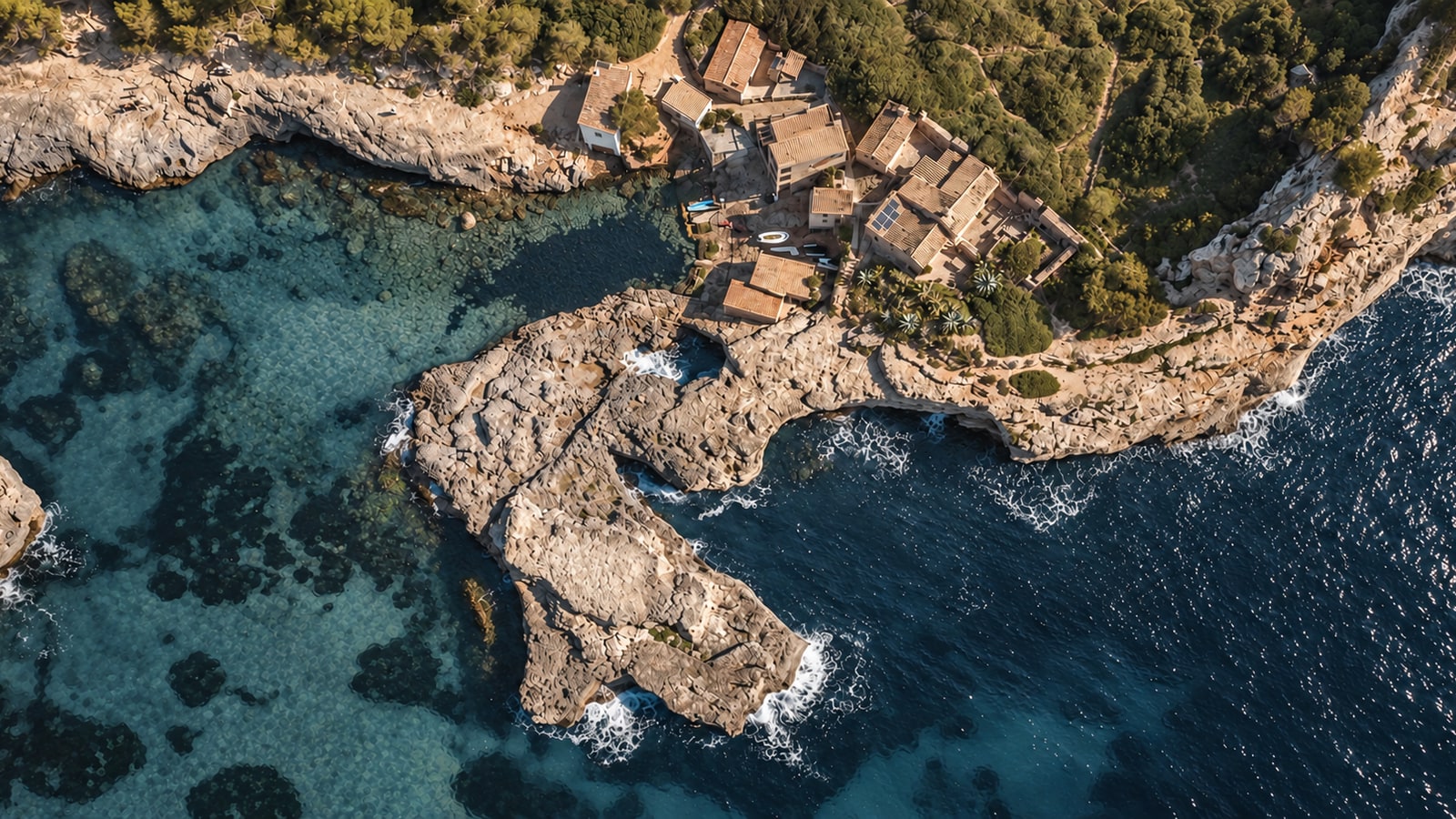
“Rare” appears frequently in property marketing, but on its own it tells a buyer very little. A useful description explains what is limited, why it is difficult to replace and whether that quality matters to the person considering the property.
In Mallorca, scarcity is specific to each home. It may relate to the setting, the site, an outlook, the architecture or a combination of qualities. Whatever the claim, it should be supported by clear information rather than left as an adjective.
Name what is difficult to replace
Begin with the feature itself. Is it the property's position, the shape or scale of its plot, a particular outlook, a distinctive architectural detail or the way indoor and outdoor spaces connect?
A clear description helps buyers decide whether that quality fits their priorities. If the view is part of the story, explain what can be seen and from where. If the architecture stands out, describe the design. If the site is the main point, set out its relevant characteristics and identify anything that needs independent verification.
Words such as “unique” and “one of a kind” need a clear basis. Specifics give buyers something meaningful to assess.
Understand both the setting and the site
A property's surroundings can be central to its appeal. Consider the immediate setting, orientation, access, privacy and relationship to the landscape. These are distinct qualities, and buyers may value each of them differently.
The plot also needs to be understood in practical terms. How is it used? Which areas are accessible? What maintenance does it involve? If a description refers to development, extension or renovation potential, seek property-specific advice from qualified planning and technical professionals before treating that potential as established.
Read architecture and condition together
Architectural details may distinguish a home, but their significance depends on the wider context. Materials, proportions, layout, natural light and the relationship between indoor and outdoor areas all contribute to how a property works.
Its condition and the records of previous work matter too. A striking design feature cannot replace a technical review. Buyers should understand what can be verified about the design, condition, ownership documents and permitted use. Where specialist judgement is required, the appropriate adviser should be involved.
Scarcity is only one part of value
A limited feature does not automatically make a property good value, easy to resell or right for every buyer. Scarcity forms one part of a wider assessment. Asking price, condition, ownership costs, intended use and the possible future buyer pool each require separate consideration.
A property may be scarce in one respect while involving compromises in another. A balanced assessment explains both what stands out and what should be examined before deciding how much that quality matters.
A practical way to test a scarcity claim
Start by naming the specific quality described as scarce and explaining how it can be observed or verified. Establish whether it is a physical characteristic, a feature of the setting or a claim about future use. Any questions requiring legal, planning or technical advice should be identified clearly. Finally, consider the quality in relation to the buyer's intended use and the rest of the property.
Give “rare” a precise meaning
A distinctive Mallorca property is best described through specifics: its setting, site, architecture and the way the home works. If a quality is genuinely difficult to replace, explaining it accurately gives buyers a better basis for deciding whether it matters to them.
Owners should support scarcity claims with clear information and verified documentation. Buyers should ask what “rare” refers to and whether that quality suits their plans.
If you are assessing or preparing to sell a distinctive property in Mallorca, Private Hideaway can help you present its characteristics clearly and define the appropriate next steps.